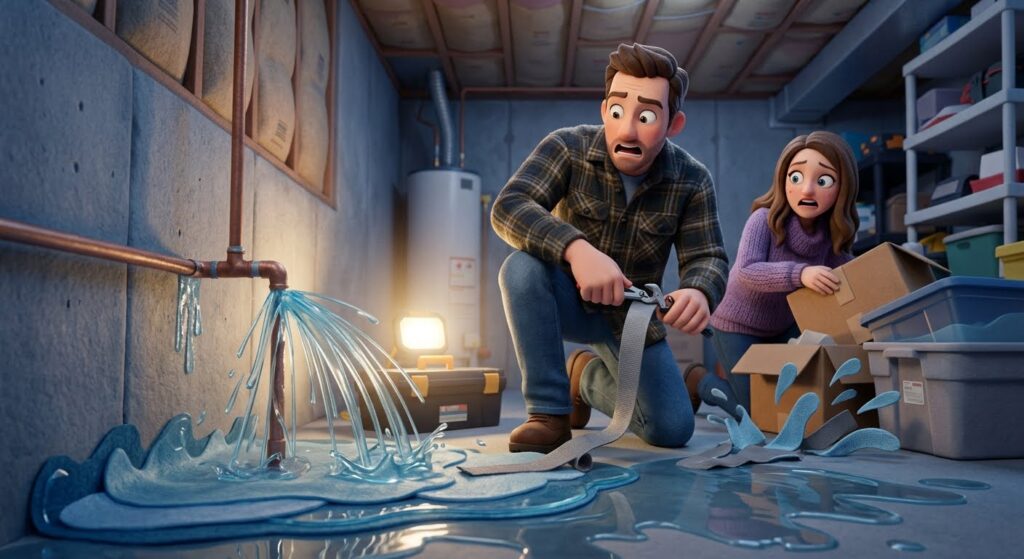
The Night the Basement Became an Ice Rink: Why Early Winter Plumbing Prep Matters
Every winter, homeowners across the country learn the hard way that water expands when it freezes. Take the story of Sarah and David.
Two winters ago, they rushed out the door for a Thanksgiving weekend family trip. In their haste to pack the car, they forgot one minor detail: disconnecting the garden hose from the backyard spigot. It seemed harmless. But as temperatures plummeted to 15°F over the weekend, the water trapped inside that hose froze solid.
The ice expanded backward, bursting the pipe right inside their finished basement wall. They returned late Sunday night to the sound of rushing water and three inches of standing pool in their basement. A simple five-minute chore ended up costing them over $4,500 in emergency plumbing repairs and mold remediation.
To save you from a winter plumbing disaster, here is your essential, proactive winterization guide.
Phase 1: The Outdoor Lockdown
Your outdoor plumbing is your home’s most vulnerable frontline defense against the cold.
- Disconnect All Garden Hoses: Detach, drain, and store your hoses in a garage or shed. Leaving them attached traps water inside the spigot.
- Shut Off Outdoor Valves: If your home has dedicated indoor shut-off valves for outdoor spigots, turn them off and open the outside tap to drain the remaining water.
- Install Faucet Covers: Pop insulated styrofoam covers over your outdoor spigots to shield them from freezing drafts.
- Blow Out Irrigation Systems: Trapped water will shatter plastic sprinkler lines. Drain the system completely or hire a pro to blow it out with compressed air.
Phase 2: Indoor Armor for Vulnerable Pipes
Pipes running through unheated spaces—like crawlspaces, attics, and garages—need extra protection.
- Insulate Exposed Pipes: Wrap vulnerable lines in foam pipe insulation sleeves or heat tape. Pay close attention to corners and T-joints.
- Seal Exterior Gaps: Look for areas where cables or pipes enter your home. Use expandable foam or exterior caulk to seal drafts that blow cold air directly onto your plumbing.
- Keep the Heat Steady: If you travel during the winter, never turn your thermostat completely off. Set it to at least 55°F to ensure your walls stay warm enough to protect hidden pipes.
Phase 3: What to Do During an Extreme Freeze
When a historic deep freeze is forecasted, modify your daily habits to protect your system.
- Open Cabinet Doors: Open kitchen and bathroom vanity doors on exterior walls. This allows warm room air to circulate around hidden plumbing.
- Drip the Faucets: Let a pencil-lead-thin stream of water run from the faucet furthest from your main water meter. Moving water is significantly harder to freeze than standing water.