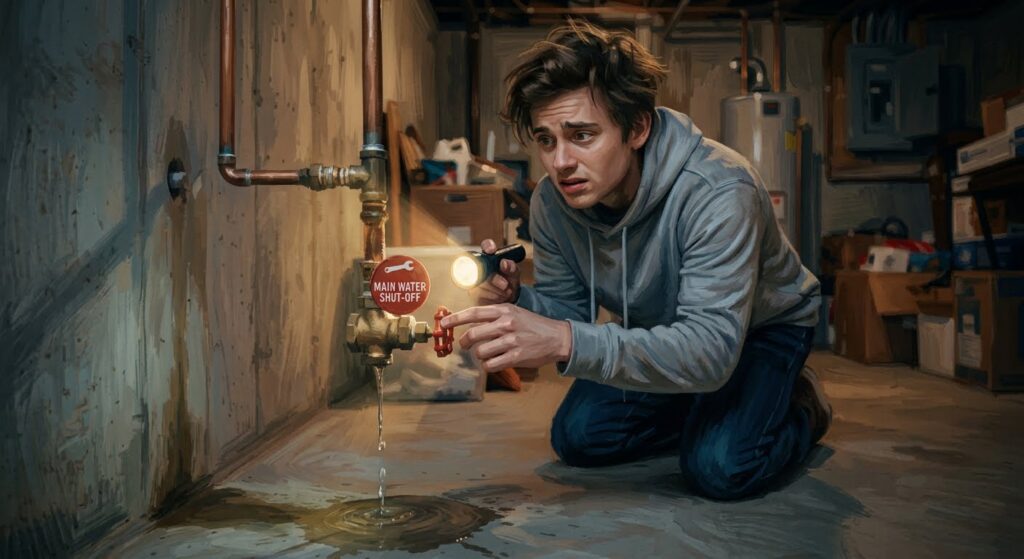
It’s 2:00 AM on a freezing Tuesday, and you wake up to a strange, rhythmic sound. Drip. Drip. Slosh. You step out of bed, only to find your feet sinking into a freezing, two-inch-deep lake that used to be your hallway carpet. Your bathroom pipe has burst, water is cascading down the hallway, and your mind goes completely blank because you don’t even know what a wrench looks like.
Plumbing often feels like one of those things you don’t think about until suddenly it’s the only thing you can think about. When a pipe leaks or a toilet overflows, panic sets in quickly—especially if you do not have any trade experience.
The good news is that you do not need a license to protect your home from major water damage. By mastering a few basic concepts, you can handle minor issues confidently and protect your property until a professional arrives.
Here are the essential plumbing tips every homeowner should know.
1. Know Your Main Water Shut-Off Valve
If a pipe bursts, the absolute most important step is stopping the water at its source. Every adult in your home needs to know exactly where the main water shut-off valve is located and how to close it.
Typically, this valve is located in the basement, in a utility closet, or near the street where the main water line enters the house. If you have a leak, turning this valve clockwise will shut down water to the entire property, instantly preventing thousands of dollars in flooding damage.
2. Locate Individual Fixture Shut-Offs
You do not always need to turn off the water to the whole house for a localized problem. Most toilets, sinks, and washing machines have their own dedicated shut-off valves located directly behind or beneath the fixture.
If a toilet begins to overflow, do not panic. Reach behind the base of the bowl, find the small metal valve, and turn it clockwise. This cuts off the water supply to that specific fixture, allowing you to address the clog without interrupting water to the rest of the household.
3. Clear Clogs Safely (Skip the Chemical Cleaners)
When a drain slows down, it is tempting to pour a bottle of chemical drain cleaner down the pipes. However, these harsh chemicals can eat away at your plumbing system, especially older metal or PVC pipes. They are also highly toxic and dangerous if they splash back onto your skin or eyes.
Instead, invest in a high-quality plunger and a basic drain snake. For sinks and showers, a simple plastic hair-snagging tool can clear out most everyday blockages in seconds without risking damage to your drainage system.
4. Understand What Can and Cannot Go Down the Drain
The easiest way to fix a plumbing problem is to prevent it from happening in the first place. Your drains are designed for water and human waste, and very little else.
Keep these items far away from your plumbing:
- Fats, Oils, and Grease: These pour down smoothly when hot, but they solidify inside your cold underground pipes, creating massive blockages.
- Flushable Wipes: Despite what the packaging claims, these wipes do not break down like toilet paper and are a leading cause of severe sewer line backups.
- Fibrous Foods: Celery, pasta, and coffee grounds can easily overwhelm a kitchen garbage disposal and jam the drain lines.
5. Listen to Your Home
Plumbing issues rarely happen completely out of the blue. Your system will usually give you warning signs if you know what to listen for.
If you notice a rattling sound in the walls when you turn off a faucet, a toilet that runs constantly when not in use, or a sudden drop in water pressure, don’t ignore it. Catching a small leak or a faulty valve early saves money on your utility bills and prevents catastrophic failures later.
By keeping these five simple principles in mind, you can take complete control of your home’s plumbing health—no tools or engineering degrees required.